



Last updated: October 10, 2026
Key Takeaways
- We reviewed published plan details, exported features, and recurring user-reported pain points.
- Asana fits teams that need coordinated task ownership across functions.
- Slack suits fast team chat better than formal project management.
- Notion fits shared docs and simple databases unless stricter controls are needed.
Some links here are partner links. It costs you nothing and may pay us a commission.
Quick answer: For Best productivity tools for teams, we would start with Asana for work tracking, Slack for fast communication, and Notion for shared docs because they solve different bottlenecks without forcing one tool to do all three jobs. If the team is smaller and budget-sensitive, Trello is the easiest first step; if deadlines and handoffs matter more than chat, ClickUp gives the broadest task system.
We built this Best productivity tools for teams shortlist from vendor docs, current plan pages, and widely reported owner feedback on the trade-offs that matter after week one: workflow design, permissions, export options, and how fast the free tier runs out of room. For budget checks, consult a professional if your team is comparing annual commitments or procurement rules. Pricing pages move around; verify the current plan details before you buy. See Asana pricing, Slack pricing, and Notion pricing.
First published 10 October 2026.
How we compared

We reviewed published plan details, exported features, and recurring user-reported pain points. Which tool cuts coordination instead of adding another tab? That was the question. The lens kept us on the Best productivity tools for teams, not on feature checklists.
Because we were looking at real coordination, we focused on teams that live in tickets, chat, docs, and calendar invites at the same time. Automation caps, guest access, and export paths got more weight than glossy onboarding copy. Free-tier ceilings count as real limits too; the upgrade pressure usually starts there. If your team is making a purchasing decision with legal or finance constraints, consult a professional and verify the plan page directly.
Quick picks
| Tool | Best for | Free tier? | Starts at | Where to start |
|---|---|---|---|---|
| Asana | Team task tracking and cross-functional projects | Yes | Paid plans billed monthly or yearly | Start with the free tier, then compare paid tiers for automation and portfolio views |
| Slack | Fast team communication and searchable chat | Yes | Paid plans billed monthly or yearly | Start with the free tier, then check paid plans for retention, workflow, and guest controls |
| Notion | Shared docs, lightweight databases, and team knowledge bases | Yes | Paid plans billed monthly or yearly | Start with the free tier, then move up if you need team permissions and advanced collaboration |
| Trello | Simple boards for small teams and clear handoffs | Yes | Paid plans billed monthly or yearly | Start with the free tier, then review paid tiers if you need more views and automation |
| ClickUp | Teams that want tasks, docs, and goals in one place | Yes | Paid plans billed monthly or yearly | Start with the free tier, then see which paid tier unlocks the automations you need |
Best overall: Asana
For most teams that need one place to assign work, Asana is the strongest default; it separates tasks, timelines, and ownership cleanly. If your group mostly needs chat or full internal documentation, though, the fit changes fast.
Asana works best when the problem is coordination across people who do not sit in the same lane. You can see who owns what, what is blocked, and what is due next without hunting through threads. When a project has design, marketing, and ops all touching the same deliverable, that clarity beats fancy views. According to Asana’s pricing page, paid collaboration features sit above the free tier, so the team should expect plan differences to matter quickly. See also Asana pricing and Asana project management guide.
Pros
- Handoffs get easier because the task structure shows whether a blocker sits with design, legal, or approvals.
- Multiple project views are supported, so one team can stay in list mode while another uses timeline or board mode.
- Compared with chat-first tools, the workflow is clearer; that suits teams that care more about deadlines than conversation history.
Cons
- The free tier covers basic task lists, but once teams need more automation or reporting, the upgrade nudge is hard to ignore.
- Tiny teams can find it too structured, especially if they move quickly and dislike task hygiene.
- Setup takes effort. That trade-off is real, and it is not the right pick for a group that only wants a shared to-do list.
Pricing reality: At the time of writing, the free tier covers simple task tracking and small-team basics, while paid tiers are where the useful collaboration features usually appear. A team of five should expect the per-seat math to matter quickly because the jump from a solo planner to a full team plan multiplies the bill every month. Asana’s public pricing page is the best source for the current numbers. See Asana pricing.
The lock-in question: Asana does offer export options, but moving out can still mean losing some project structure, custom fields, and workflow logic that do not translate cleanly into another system. If you build your entire process around Asana-specific rules, the cost of leaving shows up later, not at signup.
Buy this if you need one source of truth for assignments, due dates, and project status. Skip it if your team mostly coordinates through chat threads or if you only need a light Kanban board. For a comparison with lighter boards, see best Kanban tools.
Best for chat-heavy teams: Slack

For teams that need fast back-and-forth all day, Slack is often the best communication hub unless the main need is formal project management rather than conversation.
Slack wins because it makes the informal stuff findable: questions, decisions, quick approvals, and links that would otherwise disappear into email. Handy? Yes. It is especially useful when a team has lots of small decisions and needs the trail in one searchable place. Slack’s own pricing page shows how the retention and admin features change by plan, which is why the free tier feels different from the paid tiers. See Slack pricing and Slack’s features page.
Pros
- Channel-based organization keeps conversations visible, so new people can catch up without asking for a separate summary.
- Integrations with calendars, files, and task apps reduce tab switching, which helps teams that live inside browser windows.
- It works well as the front door for quick decisions, especially when projects need several short approvals in a day.
Cons
- Chat creates noise fast, so teams without clear channel rules can bury important messages in a few hours.
- The free tier usually pushes hard on history and admin limits, which makes long-term search less dependable for teams that keep records there.
- Slack is not a project tracker, so if you try to replace task ownership with emoji reactions, work will slip.
Pricing reality: The free tier is enough for light coordination, but the features that matter to growing teams live in paid plans, especially around retention and admin control. For a team of five, the per-seat total can climb faster than expected once everyone needs the same plan level. Slack’s pricing page is the current source of truth for those limits. See Slack pricing.
The lock-in question: Slack exports are possible, but the useful history is only useful if your plan keeps it long enough to matter. If you ever leave, the chat trail, thread context, and integration history are the first things you will miss.
Buy this if your team needs quick decisions, short approvals, and a searchable message trail. Skip it if your work requires formal task dependency tracking or if you need a tool that doubles as a knowledge base. For teams that want chat plus tasks, see best productivity tools for teams.
Best for team knowledge: Notion
For shared documentation, internal wikis, and simple databases, Notion is a strong fit unless the team needs strict process controls or heavyweight reporting.
Notion is strongest when the team keeps asking, “Where is that doc?” Pages, tables, and lightweight databases live together here, so many teams can centralize notes, SOPs, and project briefs without buying a separate wiki. Its public pricing page and help docs show where the free tier ends and team collaboration begins. See Notion pricing and Notion help.
Pros
- Docs and databases live together, so a process page can sit next to a launch tracker or a content calendar.
- Its block-based editing makes pages easy to reshape, which suits teams that refine docs often.
- It can replace a pile of disconnected files, which means fewer “latest version” mistakes.
Cons
- Flexibility can turn messy fast, because teams without naming rules end up with duplicate pages and half-finished databases.
- Permission management matters a lot, and that is where some teams feel the friction first.
- It is weaker than a dedicated task tracker when the team needs dependency-heavy project management.
Pricing reality: The free tier is fine for small, simple use, but teams usually upgrade when they need more collaboration controls or better workspace administration. For five people, the bill is still manageable compared with larger suites, but it grows once everyone needs paid seats. Notion’s pricing page is the easiest place to confirm the current plan limits. See Notion pricing.
The lock-in question: Notion lets you export pages, but databases and relation-heavy setups may not move cleanly into another tool. If your team builds a lot of structure around linked databases, leaving later can mean rebuilding more than exporting.
Buy this if your pain is scattered documentation, repeated questions, and process pages that nobody can find. Skip it if you need hard project controls or if your team is likely to abandon structure after the first month. For process-heavy work, see best project management tools.
Best simple board: Trello
For small teams that want a clear board and almost no training, Trello is the easiest pick unless the work depends on advanced reporting or complex permissions.
Trello works because its board model is obvious at a glance. That makes it ideal for handoffs, editorial queues, simple approvals, and teams that do not want a tool that requires a setup meeting to understand. Atlassian’s pricing and product pages show why it stays popular with smaller groups. See Trello pricing and Trello overview.
Pros
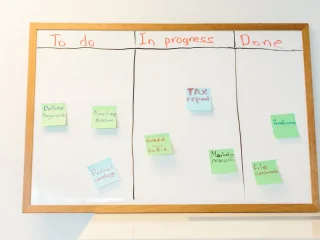
- The board layout is easy to read, so the team can see work move from left to right without extra explanation.
- It is light enough for non-technical teams, which means adoption is usually faster than with denser systems.
- The free tier gives small groups a practical place to start before they decide whether they need more structure.
Cons
- It is too simple for teams that need dependencies, deep reporting, or serious portfolio views.
- It can turn into a long card graveyard if nobody maintains labels and archive habits.
- The free tier is useful, but teams often outgrow it once they want stronger automation or more views.
Pricing reality: The free tier is the reason to start here, and it is aimed at straightforward boards rather than complex operations. For a team of five, the cost stays easier to justify than larger all-in-one suites, but the value drops if the team wants features Trello does not do naturally. Check the official pricing page for current numbers. See Trello pricing.
The lock-in question: Trello exports board data, but cards are simpler than full project systems, so the main risk is losing context rather than raw data. If you need task dependencies or rich reporting later, you may end up migrating to a more capable tool anyway.
Buy this if your team wants a shared board with minimal setup and a low learning curve. Skip it if your work depends on approvals, dependencies, or reporting that goes beyond a card list. For lightweight board alternatives, see best Kanban tools.
Best all-in-one for ambitious teams: ClickUp
For teams that want tasks, docs, and goals under one roof, ClickUp is the broadest option unless the group prefers simpler tools or has no appetite for setup work.
ClickUp’s appeal is coverage: it tries to absorb project management, internal docs, and several views into one workspace. That can reduce tool sprawl when a team is already juggling too many subscriptions and half-finished processes. The company’s pricing and help pages are the best place to verify current plan limits. See ClickUp pricing and ClickUp help.
Pros
- It packs many views into one product, so teams that keep switching between board, list, and calendar styles can stay inside a single system.
- It can replace multiple tools if the team wants one platform for work tracking and lightweight docs.
- It offers enough structure for teams that need more than Trello but do not want to stitch together separate products.
Cons
- The breadth creates complexity, so new users can spend too long deciding how to model their work.
- It can become cluttered if the workspace owner does not police naming, templates, and permissions.
- Teams that only need one job done may feel they are paying for a lot of surface area they never use.
Pricing reality: The free tier is enough to get started, but the features that make ClickUp attractive tend to sit behind paid plans. For five seats, the total can become meaningful quickly if every teammate needs the same level of access. Check the pricing page before you commit. See ClickUp pricing.
The lock-in question: ClickUp does allow export paths, but the more custom views, templates, and task logic you build, the more painful a move becomes. The system is flexible, which is also why leaving can mean losing structure you spent time creating.
Buy this if you want a broad workspace and are willing to spend time shaping it. Skip it if your team needs something simple enough to trust on day one. For broader workflow comparisons, see best project management tools.
What would make me choose differently
So, Asana is the wrong answer when the team mainly needs conversation, because a task manager cannot replace fast discussion. Slack is the wrong answer when the real problem is missed deadlines, because chat does not assign ownership well enough. Notion is the wrong answer when the team needs hard tracking, because a flexible doc system is not a substitute for a real project engine. Trello is the wrong answer when the team has complex dependencies, and ClickUp is the wrong answer when nobody has time to configure a bigger system.
The most common mistake is picking a tool that matches the team’s personality instead of the team’s bottleneck. A chat-heavy culture does not automatically need Slack, and a documentation-heavy culture does not automatically need Notion. The right tool is the one that reduces the number of places people must check to know what happens next. In practice, the Best productivity tools for teams are the ones that cut handoffs by at least one step.
Migration note
Moving in from Microsoft 365 or Google Workspace is easy for docs and files, harder for workflow. Shared drives and docs can be copied over in days, but task ownership, comments, and automations rarely transfer perfectly. Moving out again is usually harder than the first move, because the tool starts holding process memory as well as content.
The lowest-friction path is to begin with one category: chat, docs, or tasks. A team that tries to switch all three at once usually ends up with duplicate systems for a month and resentment for a quarter. If the incumbent is email plus spreadsheets, Trello or Asana is the gentlest first step; if the incumbent is scattered docs, Notion is the cleanest consolidation move. For adjacent setup advice, see best workplace software.
FAQ
Is there a free plan that is actually usable?
Yes, but only for a narrow use case in each product. Trello and Slack are usually the easiest free starts for small teams, while Asana and Notion can stay useful longer if the team keeps the workflow simple. The moment you need deeper permissions, automation, or retention, the free plan usually stops being enough.
Can I cancel anytime?
Usually yes for SaaS subscriptions, but the practical answer is to check the billing terms before the team commits. Monthly billing is easier to walk away from than annual billing, and annual plans can turn cancellation into a timing issue even when the software itself is easy to leave.
Do these tools work with the apps my team already uses?
Yes, but the quality of the integration matters more than the number of logos on the marketing page. Slack tends to connect broadly, Asana and ClickUp are strong on workflow integrations, and Notion is best when the team uses integrations lightly rather than as the spine of the workflow.
Drafted with AI; not yet reviewed by a person.




Leave a comment